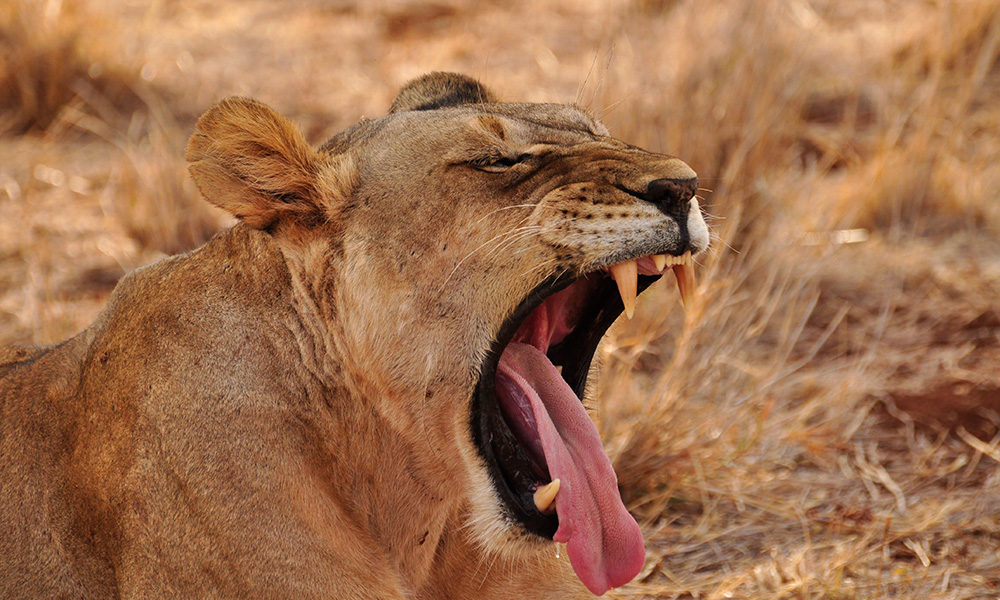
UBCO’s Dr. Adam Ford was part of a research team investigating how a tiny invasive ant is changing the eating habits of Kenya’s lions and improving the sustainability of zebras.
A newly published research paper demonstrates how a tiny, invasive insect has helped make savanna landscapes safer for zebras.
A joint project, including researchers from the University of Wyoming and UBC Okanagan, shows how invasive big-headed ants in a Kenyan savanna have caused lions to change their predatory habits— shifting their preferred prey from the iconic zebra to buffalo.
The paper, published today in the journal Science, determined the big-headed ants at Kenya’s Ol Pejeta Conservancy have made lions less effective when it comes to stalking and killing zebras, their primary prey.
It’s a clear example of how important interdependent relationships can be, says UBCO’s Dr. Adam Ford, a researcher with the Irving K. Barber Faculty of Science and Principal Investigator of UBC’s Wildlife Restoration Ecology lab.
Whistling thorn trees, the dominant tree species in much of East Africa, provide nectar and shelter for native ants. In exchange, the ants defend the trees against grazers by biting them and emitting formic acid.
“The native ants defend these trees against elephants and other herbivores,” Dr. Ford says. “But the invasive ants kill these tiny defenders and eventually those invaded trees are killed by elephants. With fewer trees, lions aren’t able to stalk and ambush zebras.”
Along with Dr. Ford and UBCO’s Dr. Clayton Lamb, the research team included Wyoming doctoral student Douglas Kamaru along with researchers from the Nature Conservancy, the University of Florida, the University of Nairobi, Duke University, the University of Glasgow, Karatina University, the University of Nevada-Reno and the US Geological Survey.
“The good news is that the lion population hasn’t declined since the insect invasion,” says Kamaru, who’s part of Professor Jacob Goheen’s research group at the University of Wyoming’s Department of Zoology and Physiology. “This is likely because lions have switched their diets from zebras to African buffalo, which are equally at risk of lion predation in invaded areas.”
The researchers hypothesized that the loss of tree cover would affect the interactions of lions and their primary prey species, zebras. Using a number of study plots—some invaded by big-headed ants, some not—and studying zebra and lion activity, the scientists found that the big-headed ant invasion reduced the occurrence of zebra kills by lions by increasing openness across the landscape.
“We show that the spread of the big-headed ant, one of the globe’s most widespread and ecologically impactful invaders, has sparked an ecological chain reaction that reduces the success by which lions can hunt their primary prey,” the researchers wrote.
The study took place at the Ol Pejeta Conservancy, a working ranch in the Laikipia region of central Kenya. The researchers say such properties are invaluable for understanding savanna ecology.
“The coexistence of lions, large wild herbivores and ranching in Kenya helped make this study possible. Such landscapes are under ever-increasing pressure to develop agriculture and housing, yet this property persists through sustainable land use management,” says Dr. Ford. “We were very fortunate to work with Kenyan students, researchers and government to study some of the most iconic species in the world today.”
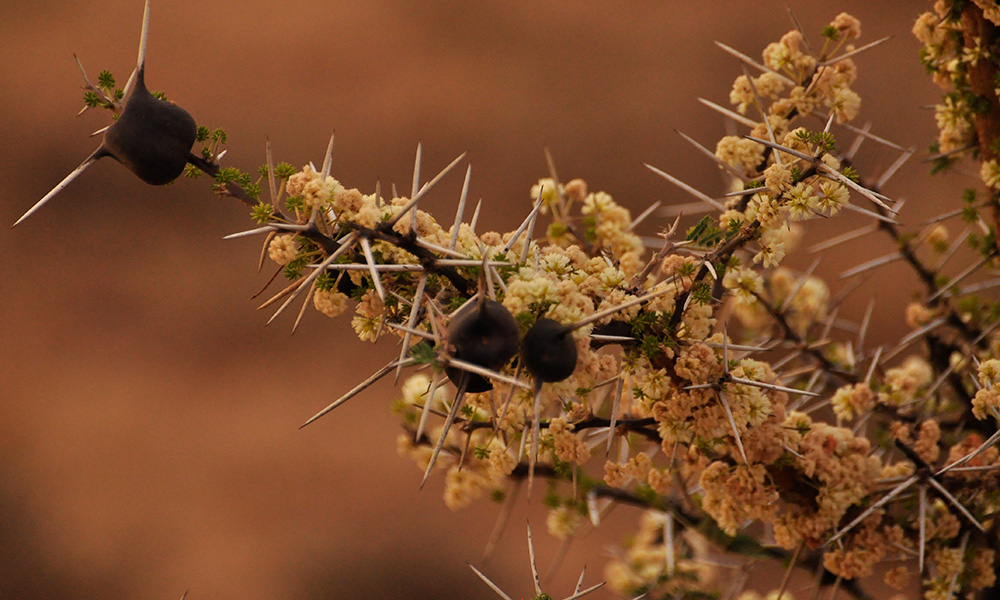
Whistling thorn trees provide nectar and shelter for native ants. Invasive ants kill the native ants and eventually those invaded trees are killed by elephants.