Faculty Profile, People, Research, Science
Balancing humans and habitat in biodiversity
January 15, 2024
About
Name
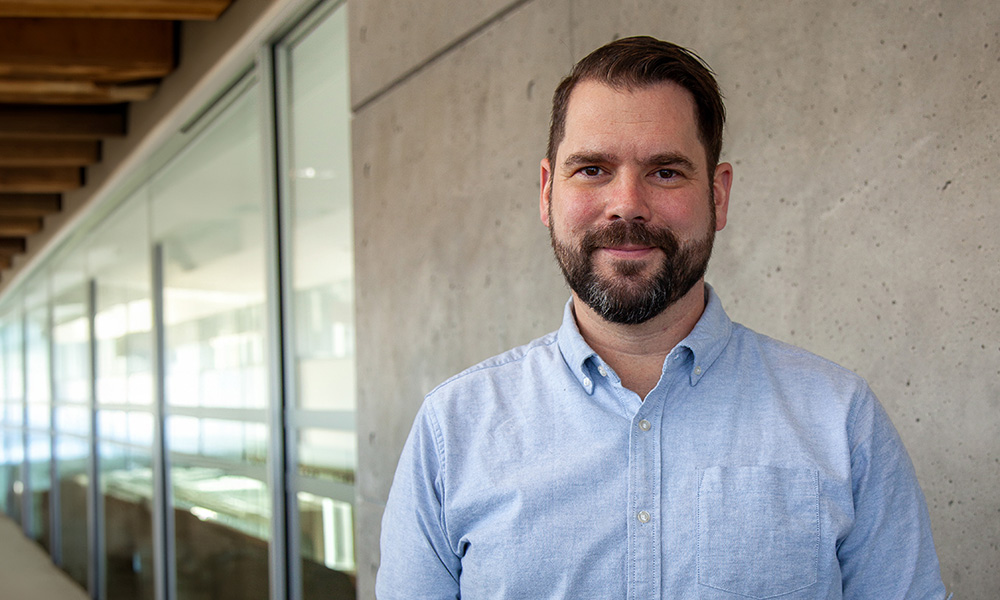
Adam Ford
Role
Associate Professor
Canada Research Chair in Wildlife Restoration Ecology (Tier 2)
Director, Okanagan Institute for Biodiversity, Resilience & Ecosystem Services (BRAES)
Program
Biology
Faculty
Irving K. Barber Faculty of Science
Campus
Okanagan (Kelowna, BC)
Education
Liber Ero Fellow, University of Guelph
PhD, UBC Vancouver
Master of Science, Carleton University
Bachelor of Science, University of Victoria
Hometown
Calgary, Alberta
“You can look at the recent wildfires in the Okanagan and see the need for the work BRAES members do to support better decisions and give the landscape a voice. We care about this community, and we’re doing work that we believe will help the Okanagan.”
WHETHER HE’S HIKING A NEW PEAK or setting up cameras for field research, Dr. Adam Ford can’t help but see the Okanagan Valley’s incredible beauty—and the intense pressure the region is under.
“The Okanagan is exceptionally diverse ecologically,” says Dr. Ford, an Associate Professor of Biology in the Irving K. Barber Faculty of Science and the Canada Research Chair in Wildlife Restoration Ecology (Tier 2).
“We have salmon swimming in large lakes right beside a desert with cacti and rattlesnakes, grasslands with badgers, and within a 60-minute drive you can be above the tree line in an alpine meadow with mountain goats and grizzly bears. It’s also a vibrant, food rich and urban place—one of the fastest-growing communities in Canada because people want to be here. It’s beautiful.”
With that agricultural and urban growth comes challenges to biodiversity, such as water limitations, development through wildlife corridors and the shrinkage of rare grasslands.
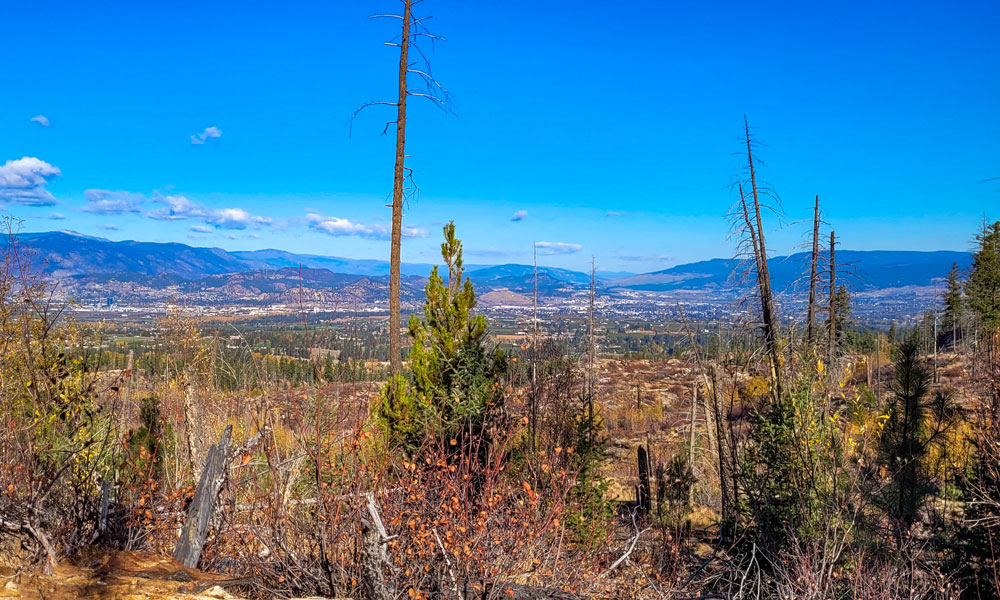
Plants have returned to the site of the devastating 2003 Okanagan Mountain Park fire, and this area now supports a vibrant wildlife community. Between the City of Kelowna and the fire are many agricultural operations, including fruit orchards and vineyards, making this land some of the highest valued real estate in Canada.
As the new Director of the Okanagan Institute for Biodiversity, Resilience and Ecosystem Services (BRAES), Dr. Ford wants the institute—and UBC Okanagan—to support local communities, land, wildlife and water, offering research that helps build a more sustainable way of life in the Okanagan.
BRAES is one of five research institutes at UBC Okanagan, funded by the Office of the Vice-Principal, Research and Innovation to provide opportunities for researchers to collaborate and share knowledge across disciplines and into the community.
As the head of BRAES, Dr. Ford hopes to strengthen the institute’s research support network. His priorities include strong regional partnerships and speaking to the need for reconciliation, including support for indigenizing research programs and partnering with Indigenous communities, particularly in the Syilx territory where UBC Okanagan is located.
His background has positioned him well for the new role.
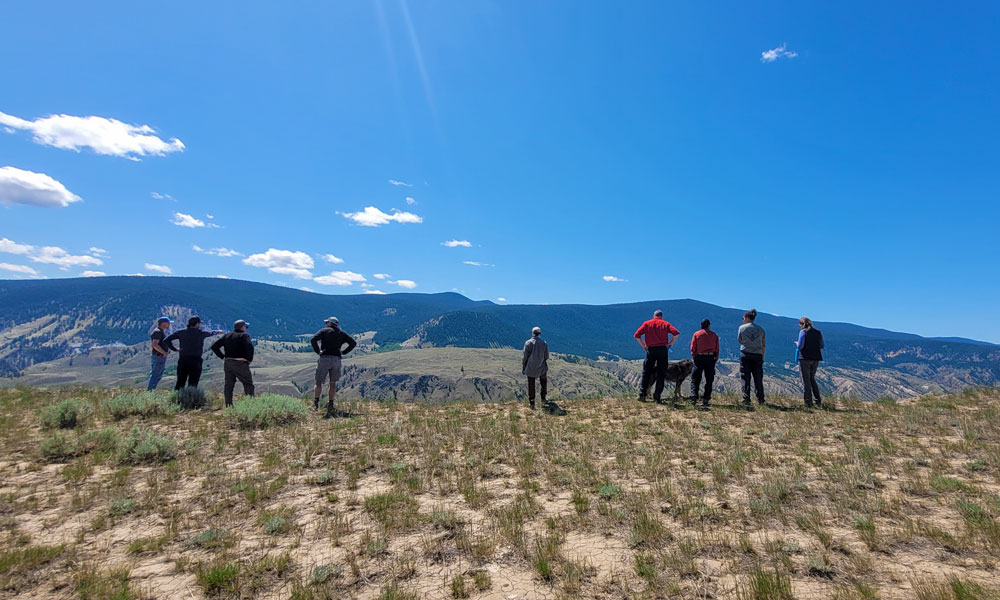
Community leaders from Esk’etemc First Nation, BC Wildfire Service, non-governmental organizations and BRAES researchers gather to plan cultural and prescribed fire in the Cariboo region. Indigenous-led fire management is helping to reinvigorate cultural practices and restore populations of wildlife species like bighorn sheep, elk and mule deer.
Dr. Ford leads the Wildlife Restoration Ecology (WiRE) Lab, where he studies how human activity in landscapes affects interactions between large predators, prey and plants. The key goal of this work is restoration—the human-assisted recovery of nature. To do this, he and his lab partner with governments, Indigenous communities and other organizations to help people and wildlife co-exist more peacefully.
His past and ongoing research projects include an award-winning study of the tripling of a mountain caribou herd under Indigenous-led stewardship, informing on human/wildlife conflict with wolves in coastal BC and bears in the Rocky Mountains, and assessing the functionality of wildlife corridors in BC—or, areas set aside from human development to allow animals to move through the habitat.
“Dr. Ford brings energy, creativity and extensive research experience to the leadership of BRAES,” says Dr. Phil Barker, Vice-Principal, Research and Innovation. “His work in conservation and regional collaborations are a perfect fit for the BRAES mandate, and I am looking forward to seeing how he will use this role to benefit not just the institute and our campus, but the wider sustainability conversation in the Okanagan.”
While many researchers in BRAES are biologists like Dr. Ford, interdisciplinarity is one of the institute’s key strengths.
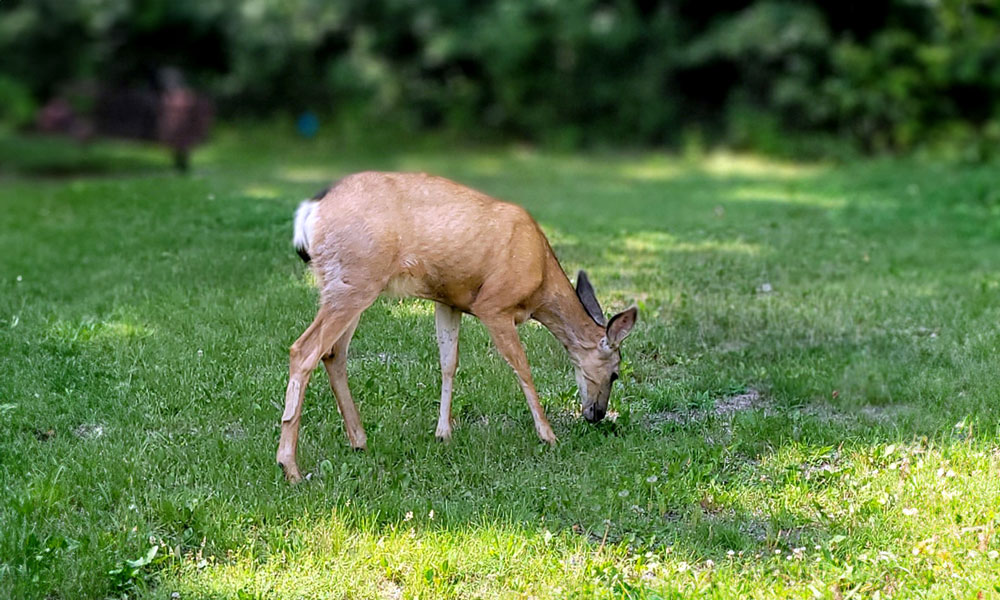
As an indicator species, mule deer are the “canary in the coalmine” that tells researchers about the health of the landscape. Dr. Ford helps lead the province’s largest mule deer study to date—the Southern Interior Mule Deer project—involving several graduate students, hundreds of trail cameras and GPS tracking of deer migrations.
BRAES connects researchers across disciplines, from biology to computational statistics to the humanities. For Dr. Ford, these diverse skills are essential to solving complex problems like climate change and sustainability.
“The world is a complicated place, and we need a lot of different ways of knowing to help solve these problems,” he says. “Western science can be a helpful tool, but it’s just one tool in the toolbox. To solve complicated problems, we need a diverse set of tools.”
In the future, Dr. Ford dreams of UBC Okanagan researchers having access to field research facilities in the Okanagan, coordinating with community partners on long-term biodiversity monitoring for the valley and hiring an interdisciplinary postdoctoral fellow who could work across faculties in BRAES.
“You can look at the recent wildfires in the Okanagan and see the need for the work BRAES members do to support better decisions and give the landscape a voice,” says Dr. Ford. “We care about this community, and we’re doing work that we believe will help the Okanagan.”